 (I love to) take a photograph
Why I Use Film – Part 1 – Coming Back to Film
I shoot film because I enjoy it. I thought it would be interesting to try and articulate why that is.
This is a two-part essay. This, the first part, will talk about my history as a photographer and how I came back to shooting film, the second part will focus on why I continue to shoot film as part of my photography practice - despite analog photography being less convenient than digital.
As a child in the late 80s / early 90s, I started out photographing things using film - the only option back then. I wasn’t a child prodigy, I just took a few holiday snaps. In the early 2000s, as a young adult I bought a digital camera, but I was fairly disappointed with the results. My first digital camera didn’t have enough memory to hold many photos and anyway, once you’d taken the photos, the options for sharing them were limited.
I gradually upgraded my camera and digital photography became more practical and it became easier to share the results. Around 2015, two things really sparked my interest and made me take photography (a bit) more seriously. The first was buying a Digital SLR camera and the second was joining the photo club Les Photophiles de Villennes.
Having a D-SLR was important for me, as it encouraged me to take control of my photography. Seeing all the buttons on the camera meant I wanted to learn what they did. Having the possibility to change the lens made me wonder what effect the lens had on the photograph, and perhaps more importantly made me wonder what lens was most suitable for the photos I wanted to take. This led to a long period of reading and experimentation.
Joining Les Photophiles meant I suddenly had access to advice and feedback about my photos. Perhaps more importantly than that, I was strongly encouraged to print my photos to take part in the various competitions and exhibitions run by the club. This made me fall in love with photo prints. While viewing photos on a screen is fine - I came to feel the final product is the print that you can hold in your hands.
At Les Photophiles I was lucky enough to have access to the club’s printer - a high spec 9 colour printer capable of printing up to A2 size prints. Having the ability to make high quality prints myself made me appreciate the art of printing. In some ways digital printing is pretty straightforward: feed the printer paper and then press print and you’ll get something. But then, will what you print match what you saw on the screen? To a certain extent, yes, you’ll recognise the image, but the colour tone might not be as bright as you expected, the shadows could lack detail, the white areas might let the paper show through. The options for tuning the printer are endless; add to that the choice of paper, and there are a huge number of ways a digital image can be printed. Artistic choices and compromises must be made. Digital printing does have a certain noblesse.
After leaving Villennes for Paris, I wanted to continue printing my photos, but I wasn’t sure how. Buying a high spec printer is relatively cheap but the running costs (mainly the ink) are high. The inks will dry and clog the print heads if the printer is not used regularly. A printer can take up a fair amount of space. Owning a printer in Paris doesn’t seem practical, but I have yet to find a lab that will give shared access to a printer. Sure, there are many labs that will print your photos for you, using high quality materials - but having someone print it for you is expensive, ultimately I’d like to be the one doing the printing.
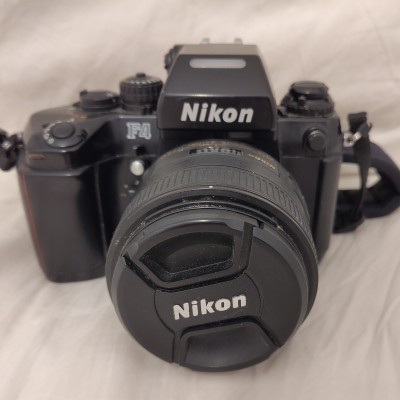
I found several labs which give you access to darkrooms to print your own analog photos and I now regularly go to Emulsion lab. To be able to print analog photos, I needed negatives so I needed to start taking analog photos. That was the start of my analog adventure.
There are plenty of second-hand analog cameras available online and although film is expensive it’s still very easy to obtain all sorts of different film types and brands. I found much of what I learned as a digital photographer applied to analog photography. In fact, digital photography is perhaps a better way to learn, since mistakes are much less costly.
I enjoyed sending film to the lab and waiting for the results. The same anticipation I felt when dropping off my holiday photos at the lab when I was young. Processing film in a lab is expensive, so as I started to shoot more film, I looked for ways to reduce the cost and found processing at home was a good way to do this.
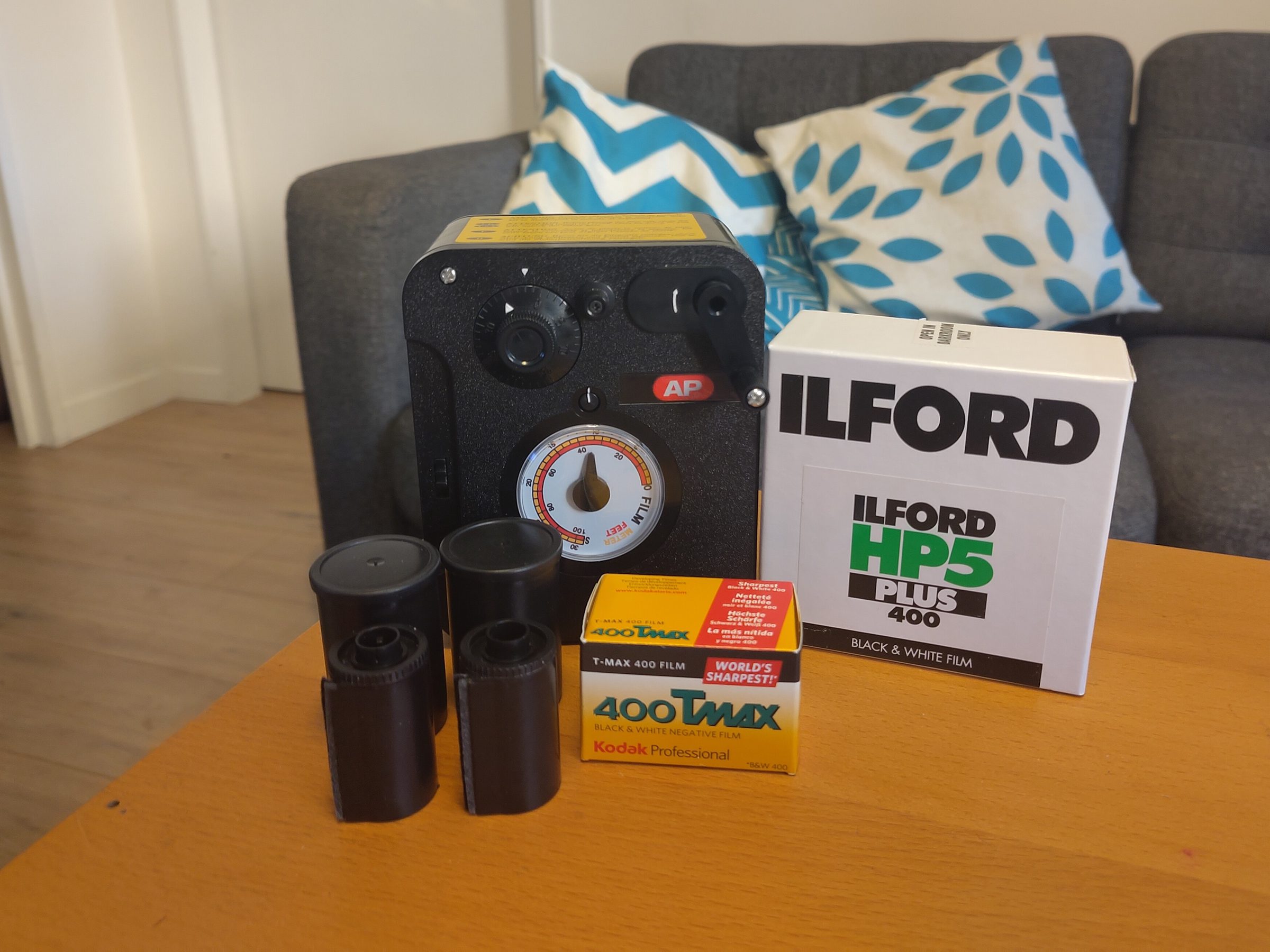
I obtained some second-hand kit to process my films into negatives at home. Processing your own film is very satisfying. It also gives you more control to experiment with different developer agents and timings. You feel like a chemist working magic in a darkroom, and the anticipation and relief when you finally see tiny pictures on the film is a great rush.